
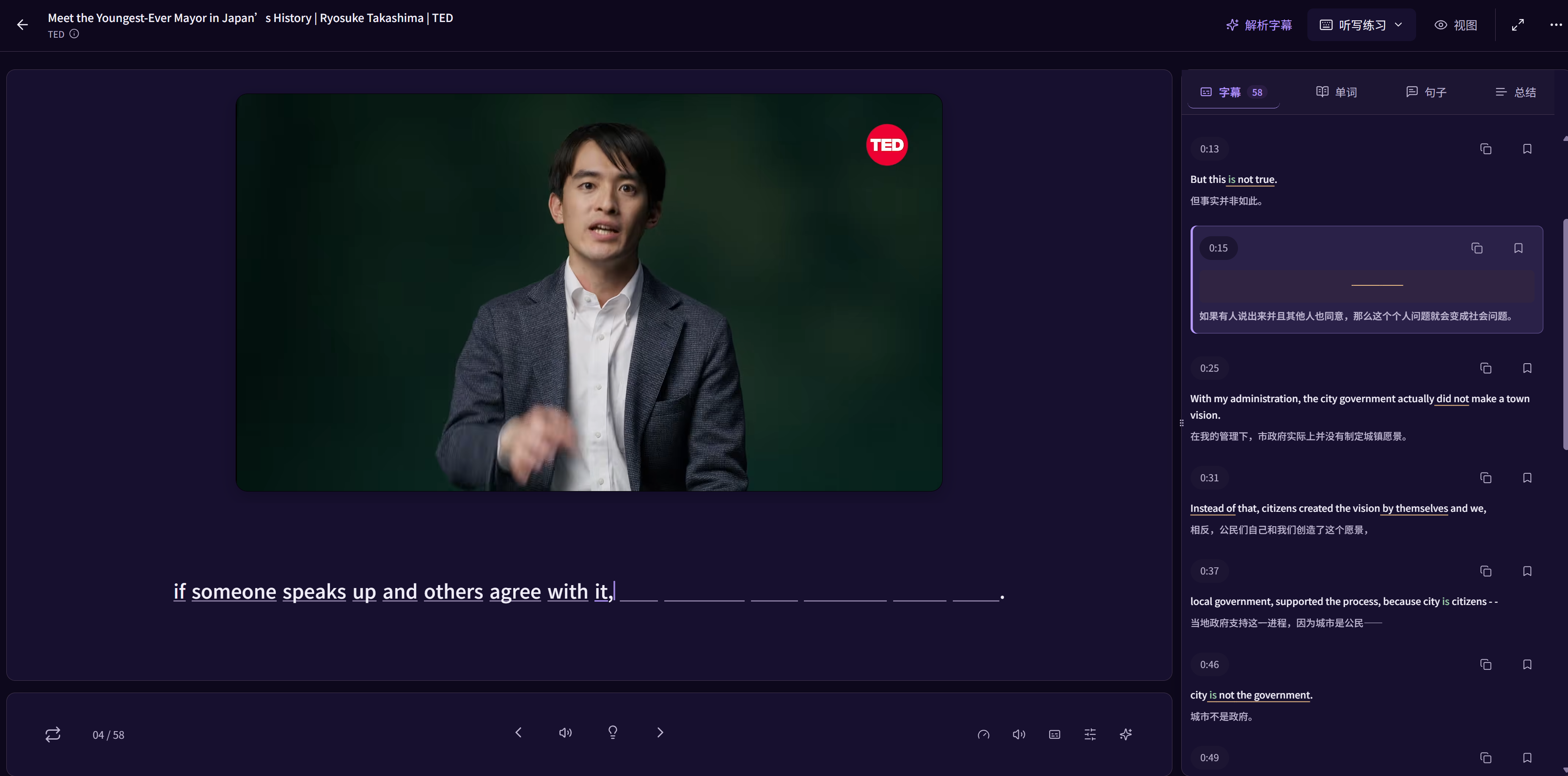
An unfamiliar podcast can feel like a stream of words with no gaps. Replaying the entire episode rarely tells you exactly what you missed. Intensive listening reduces the task: work with a short passage, check what caused the difficulty and listen again with a specific question.
This guide uses English examples, but the practice steps can be adapted to another learning language. You do not need a LearnBit account to understand or try the method.
Broad listening, intensive listening and dictation do different jobs
Broad listening means following the topic without stopping for every unknown word. Intensive listening means checking a small passage carefully. Dictation is a particular exercise: writing what you hear and comparing it with a reference.
You can combine them in one session. Listen broadly to find an interesting passage, study that part closely, then return to the episode. You do not have to dictate the whole programme.
Choose a passage you can understand with a little help
Pick an episode about something familiar. Select roughly half a minute to a minute of speech, or an even shorter passage if needed. Look for audio you can hear clearly and a transcript you can check.
If almost every sentence remains unclear after reading the text, choose easier material. A passage with a few identifiable gaps gives you something concrete to practise.
Listen without the text and write the main point
Play the passage once without looking at the transcript. Write a brief summary in a language you are comfortable using. You are checking whether you understood the message, not testing perfect spelling.
On a second listen, mark where you lost track. Was it a new word, a familiar word you did not recognize in speech, an unclear word boundary or a structure you did not understand? That distinction determines your next step.
Use the transcript to identify the gap
Read the corresponding text and compare it with your listening. Check a word or sentence structure only when it helps explain the passage. Then listen to the audio again while following the text.
For example, take the practice sentence ‘I thought it would take longer.’ If you understood the words when reading but missed ‘would’ in the recording, return to the short phrase around it. If ‘take longer’ was unfamiliar, first make sure its meaning is clear.
Transcripts can contain mistakes. If a line sounds wrong or does not fit the topic, check the source rather than learning the text by default.
Try dictation on one or two sentences
Hide the text, listen to a short sentence and write what you hear. A few replays are fine; avoid stopping after every sound. Compare your attempt with the transcript and note a specific difference.
Treat an error as information. Missing a small word asks for another listening task; misunderstanding an expression asks for a meaning check. A typing mistake does not necessarily mean you failed to hear it.
- Listen to the whole short sentence.
- Write your best attempt before opening the reference.
- Check one unclear phrase, then replay the whole sentence.
Return to listening without the transcript
Play the passage again with the text hidden. Can you follow the main point and recognize the phrase you worked on? If not, shorten the passage or return to the part that is still unclear.
Save a small number of useful expressions with their sentence and source. Come back to the audio in a later session to see what remains familiar. One well-understood passage is a useful result; finishing an episode is not the only measure.
How LearnBit can help with this routine
Where available, LearnBit keeps podcast text and playback together, supports sentence replay and dictation, and lets you save expressions with their source. These tools reduce switching between a player, a transcript and a separate word list.
Choose your learning and native languages in the app. Episode text, translation, AI tools and speaking feedback depend on the content, language pair and account access. You can also use this routine with a transcript, notes and an ordinary player.
Questions about this method
What if the podcast has no transcript?
You can still listen for the topic, but dictation is harder to check reliably. For this routine, choose a passage with a usable reference, or verify an available generated transcript against the original audio.
Should I slow every passage down?
Use a slower speed when it helps locate a difficult phrase, then return to the original speed. The aim is to recognize the expression in the actual speech, not only in a slowed recording.
How much should I practise in one session?
Choose an amount you can understand and revisit. A handful of sentences is enough to begin; shorten the task when attention or comprehension drops rather than forcing a fixed duration.